The Undergraduate Program in Earth and Planetary Sciences
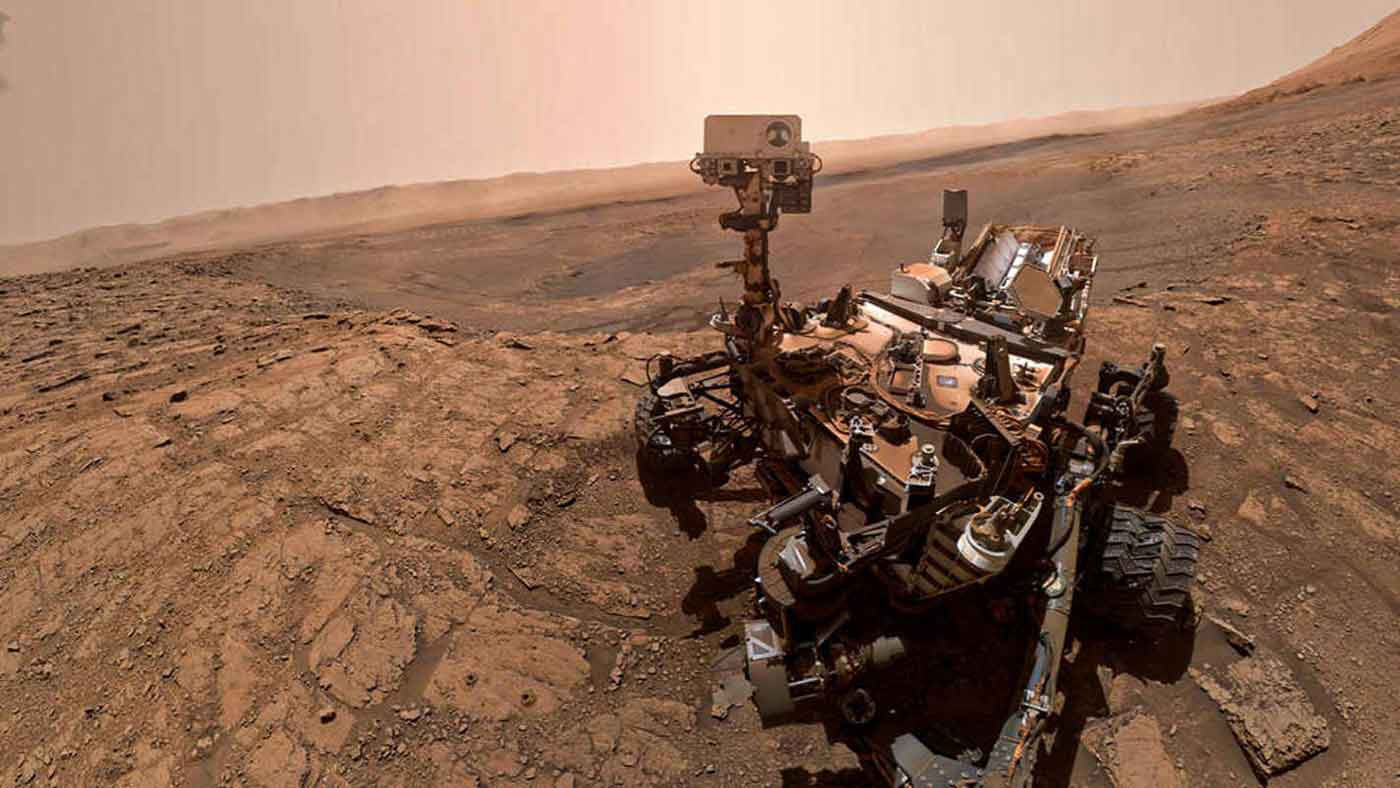
Geology is the study of the physical composition, environments, and natural processes of the Earth and other planetary bodies. Geologists are an eclectic bunch - climbing volcanoes to study their composition, measuring the violent shaking of earthquakes, investigating how mountain ranges form, examining climate trends in both the present and the ancient past, learning to keep our air and water clean, exploring for new mineral and hydrocarbon resources, and unraveling the origin and evolution of life.
Why study Geology? A student might take one of two viewpoints about the study of the Earth. The first is simply the desire to understand the way the Earth works: the origin of the mountains and the seas. the diversity and evolution of life, the birth of the planets. The quest for knowledge is exhilarating!
A statement made by the historian, Will Durant, summarizes a second viewpoint, "Civilization exists by geological consent, subject to change without notice."
We live on the Earth, use its resources, and cope with its upheavals. With the discovery of the accessibility, diversity, and utility of the minerals of the Earth's crust, geological awareness became interwoven with cultural advancement. Today, we seek safeguards against natural threats from earthquakes, landslides, and volcanic eruptions. We also have the power to befoul our environment. Many geologists try to find new mineral and energy resources. Others seek to minimize the effects of natural disasters on our lives. Some try to educate legislators and their constituents to form sound public policy. Other geologists help to clean up waste sites that were thoughtlessly developed.
These viewpoints are not mutually exclusive - a great testament to the diversity of the geosciences is that most geologists are interested in both!
Earth and Planetary Sciences at UT
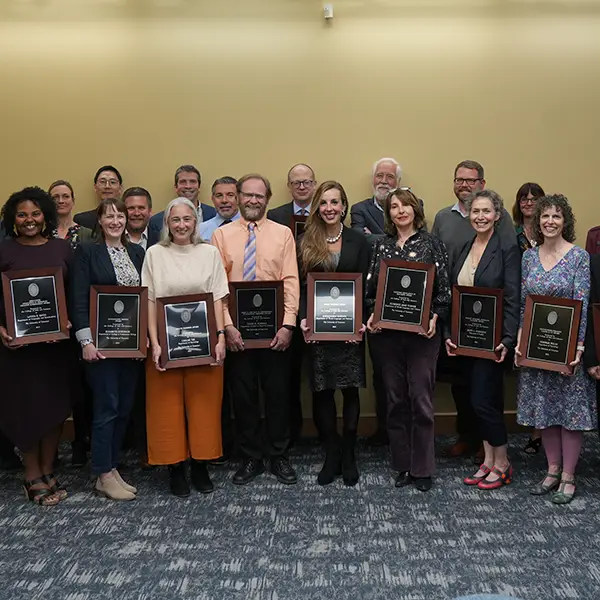
The Department of Earth & Planetary Sciences prides itself on a student-friendly atmosphere. Major classes are small (typically 15 students), there are opportunities (through undergraduate research and 400-level electives) to tailor the program to personal interests, and students have many opportunities to get to know their professors on a one-on-one basis. We encourage undergraduate participation in departmental activities - everything from interacting with graduate students, to participating in departmental seminars, brown-bag lunches, barbeques, and parties. The department provides undergraduates with in-house computer services, a study lounge, and access to conference/workshop travel grants and more than $3000 in awards and scholarships that are presented each Spring at our Awards Day ceremony.
To facilitate undergraduate involvement in the department, EPPSA, the Earth & Planetary Sciences Student Association, has both a graduate and undergraduate officers. EPPSA typically arranges weekend excursions (spelunking, white-water rafting, visits to local geologic sites, etc.), encourages student involvement in community activities (McClung Museum, Knoxville Gem and Mineral Society, Eastern TN Geological Society), plans several departmental parties per year (Fall BBQ, Halloween Party, Spaghetti Supper, Spring Pig Roast), and produces the annual Spaghetti Supper Movie, in which students display their creativity while mercilessly making fun of their professors.
Planning your Major in Earth and Planetary Sciences at UT
Most students will progress into the major by taking introductory geology courses and basic chemistry (see Requirements for a Geology Major and Four-Year Sample Curricula below). However, there are many different routes to completing a major in Geology at the University of Tennessee! For instance, we discourage students from taking Geology 310 (Mineralogy) if they have not completed at least one semester of basic chemistry; these students, however, frequently progress into the major through Geology 320 (Paleobiology) and Geology 340 (Sedimentology and Stratigraphy). Courses used to satisfy upper-level elective requirements will also vary depending on the interests of the student. Some students will take advantage of customized undergraduate research opportunities, whereas others take approved upper-level courses in the Department of Geography (e.g. GIS courses) or in the Schools of Agriculture or Engineering.
The best strategy for planning your major is to set up an appointment with a departmental advisor as soon as possible. Your advisor will be able to guide you through the major requirements, help you choose appropriate upper-level electives based on your interests and goals, inform you of undergraduate research opportunities, and help you move successfully into your post-graduate career as a geoscientist. To speak to a departmental advisor, a student can either call the College of Arts & Sciences Advising Center (865-974-4483) and ask for an appointment with the Geology representative, or call the Department of Earth and Planetary Sciences (865-974-2366) and ask to speak with a departmental advisor.
Requirements for the Geology Major
Note: Along with departmental requirements, students are required to complete additional requirements for the College of Arts & Sciences and the university. Details regarding these requirements can be found at the website for the College of Arts & Sciences Advising Center.
Progression into the Geology Major:
To progress into the major, students must take 2 of Geology 101-102-103, as well as Chemistry 120-130.
Note: Chem 130 can be taken concurrently with Geology 310.
Co-requisite Requirements for the Geology Major:
Geology requires a broad background in the physical sciences. Co-requisite requirements include Math 141-142, and 3 courses from Biology 130-140 and Physics 135-136.
Note: Co-requisite courses can be taken at any time during completion of the geology degree. Some of these courses, however, are required as prerequisites to specific 300- and 400-level courses. Students should check course listings and speak with their advisor to assure adequate preparation for courses.
Geology Major Requirements:
Upper-division requirements include Geology 310-320-330-340-370-380 (24 hours), a minimum of 5 hours of an approved field camp, and 9 elective hours at the 400-level or above. We encourage students to participate in undergraduate research (Geology 493). A maximum of 3 hours of Geology 493 may count towards the major.
Note: When preparing to attend field camp, students should meet with the departmental field camp representative for advice and approval of their chosen field camp.
Honors Concentration in Geology:
Students with 5 upper-division Geology courses and a cumulative GPA of at least 3.0 are encouraged to pursue an honors concentration, which includes completion of 3 hours of Geology 491, 492, or 493 beyond the normal major requirements, submission of a written thesis, and oral presentation of thesis results.
Minor Concentration in Geology:
A minor in Geology consists of 2 of Geology 101-102-103, and an additional 16 hours at the 200-level or above. A maximum of 6 hours at the 200-level and 3 hours of Geology 493 may count towards the minor.
Four-Year Sample Curriculum:
| Freshman Year: English Composition Geology 101-102 Chemistry 120-130 Humanities, Non-US History, or Social Science Elective Total Credit Hours |
(6) (8) (8) (6) (3) (31) |
Sophomore Year: Foreign Language Math 141-142 Geology 310-320 (fall) Geology 330-340 (spring) Total Credit Hours |
(6) (8) (8) (8) (30) |
|
| Junior Year: Foreign Language or Elective Physics 135 (fall) Biology 130 (spring) Geology 370-380 Geology 440 (summer) Humanties, Non-US History or Social Science Total Credit Hours |
(6) (4) (4) (8) (5) (3) (6) (33) |
Senior Year: Biology 140 or Physics 136 Upper-level Distribution Geology (400-level or above) Humanties, Non-US History or Social Science Electives Total Credit Hours |
(4) (6) (9) (6) (6) (31) |
|
Grand Total Credit Hours(125) |
||||